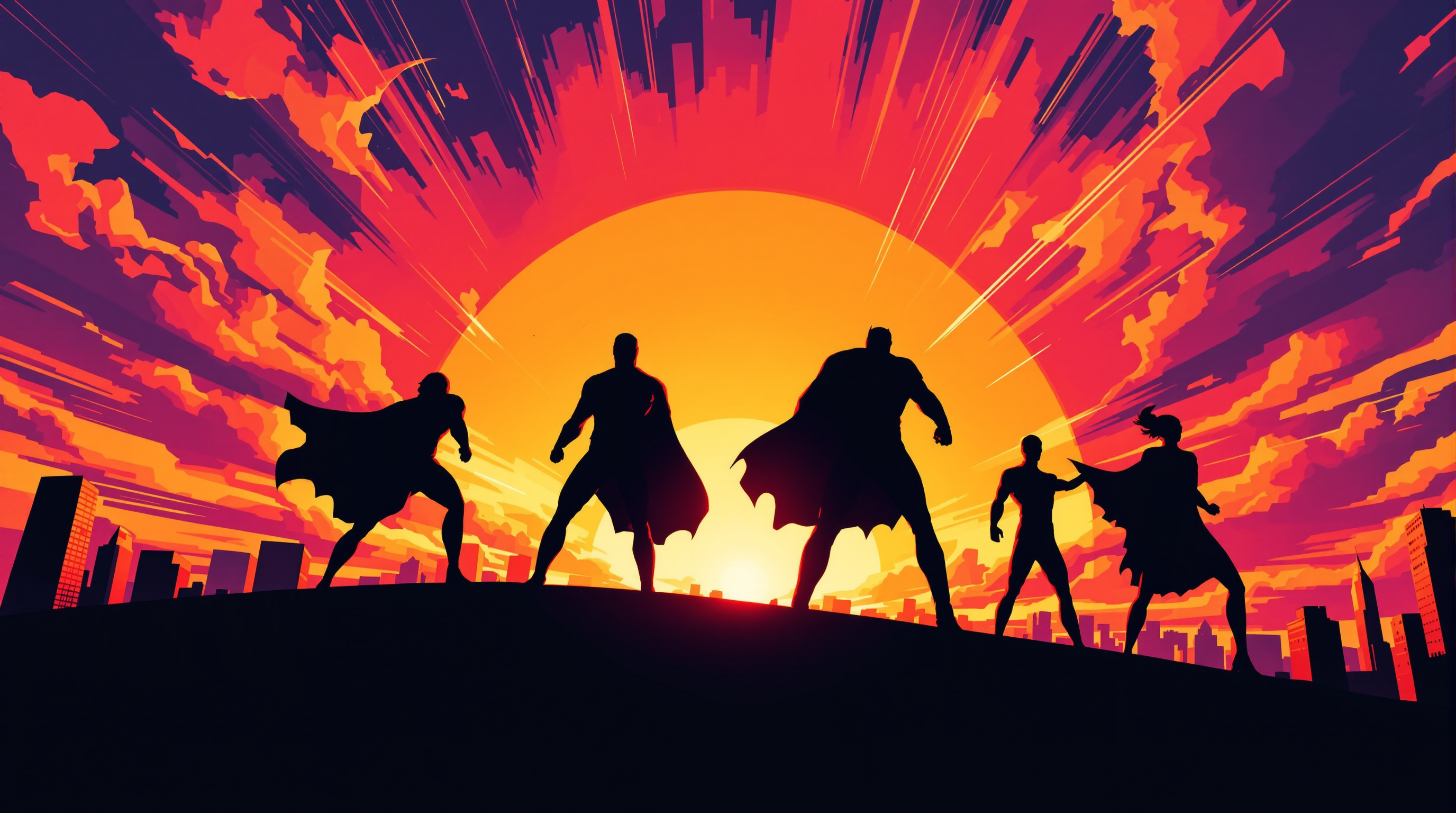
Superman: The First Superhero
Created by Jerry Siegel and Joe Shuster, Superman debuted in Action Comics #1 (June 1938) and immediately redefined popular entertainment. The last son of Krypton, sent to Earth as an infant and raised by Kansas farmers, combines incredible power with small-town American values.
Superman established superhero conventions: the secret identity, the colorful costume, the powers beyond normal humans, and the commitment to justice. His "S" shield is one of the most recognized symbols globally, and according to cultural surveys, Superman consistently ranks among the most recognized fictional characters worldwide.
Batman: The Dark Knight
Bob Kane and Bill Finger created Batman for Detective Comics #27 (May 1939). Unlike Superman, Batman possesses no superpowers. Young Bruce Wayne witnessed his parents' murder and dedicated his life to fighting crime through physical training, detective skills, and technological resources.
Batman's appeal lies in his humanity. He represents the possibility that determination and preparation can create a hero. His rogues gallery, including the Joker, Catwoman, and the Riddler, ranks among fiction's greatest villain collections.
Spider-Man: The Everyman Hero
Stan Lee and Steve Ditko introduced Spider-Man in Amazing Fantasy #15 (August 1962), revolutionizing superhero storytelling. Peter Parker was a teenager dealing with school, dating, and family problems alongside his crimefighting career.
Spider-Man's mantra, "With great power comes great responsibility," encapsulates his moral compass. His relatable struggles made superheroes accessible to readers who saw themselves in Peter's everyday challenges.
Wonder Woman: The Warrior Princess
William Moulton Marston created Wonder Woman for All Star Comics #8 (December 1941). Princess Diana of Themyscira left her Amazon homeland to bring peace to man's world. As the most prominent female superhero, Wonder Woman blazed trails for representation in comics.
Wonder Woman combines warrior prowess with compassion, challenging the notion that strength requires violence. She stands as a symbol of empowerment, featured prominently in United Nations campaigns for women's rights.
The X-Men: Outcasts United
Stan Lee and Jack Kirby created the X-Men in 1963. Born with genetic mutations granting extraordinary abilities, mutants face persecution from a fearful humanity. The X-Men protect a world that hates and fears them.
The mutant metaphor resonates with anyone who has felt different. X-Men stories tackle prejudice, civil rights, and the struggle for acceptance, remaining relevant across decades.
Legendary Villains
Great heroes require great villains. These antagonists define their heroic counterparts:
- The Joker - Batman's chaotic opposite, representing anarchy against order
- Lex Luthor - Superman's human nemesis, genius corrupted by jealousy and ambition
- Magneto - Holocaust survivor turned mutant extremist, tragically sympathetic
- Doctor Doom - Monarch, sorcerer, and genius; Marvel's most complex villain
- Thanos - Cosmic threat whose quest for balance brought universal devastation
Beyond Superheroes
Comics feature memorable characters across all genres:
- Hellboy - Demon raised by humans, fighting supernatural threats
- Marv - Sin City's brutal antihero in a noir nightmare
- The Sandman (Dream) - Neil Gaiman's personification of dreams and storytelling
- Carl Grimes - Walking Dead's symbol of hope in apocalypse
These characters demonstrate comics' narrative range, proving the medium can tell any story with depth and artistry.
Rising Stars: Modern Characters Making an Impact
Recent years have introduced compelling new characters who resonate with contemporary audiences. Miles Morales brought a fresh perspective to the Spider-Man legacy, while Kamala Khan's Ms. Marvel captured the experience of a new generation of readers. Characters like Moon Knight have gained wider recognition through media adaptations, introducing their complex psychologies to audiences beyond traditional comics readers.
Independent publishers continue pushing creative boundaries with original characters. Series from Image, BOOM! Studios, and Dark Horse regularly introduce protagonists that challenge genre conventions and bring diverse perspectives to sequential storytelling.