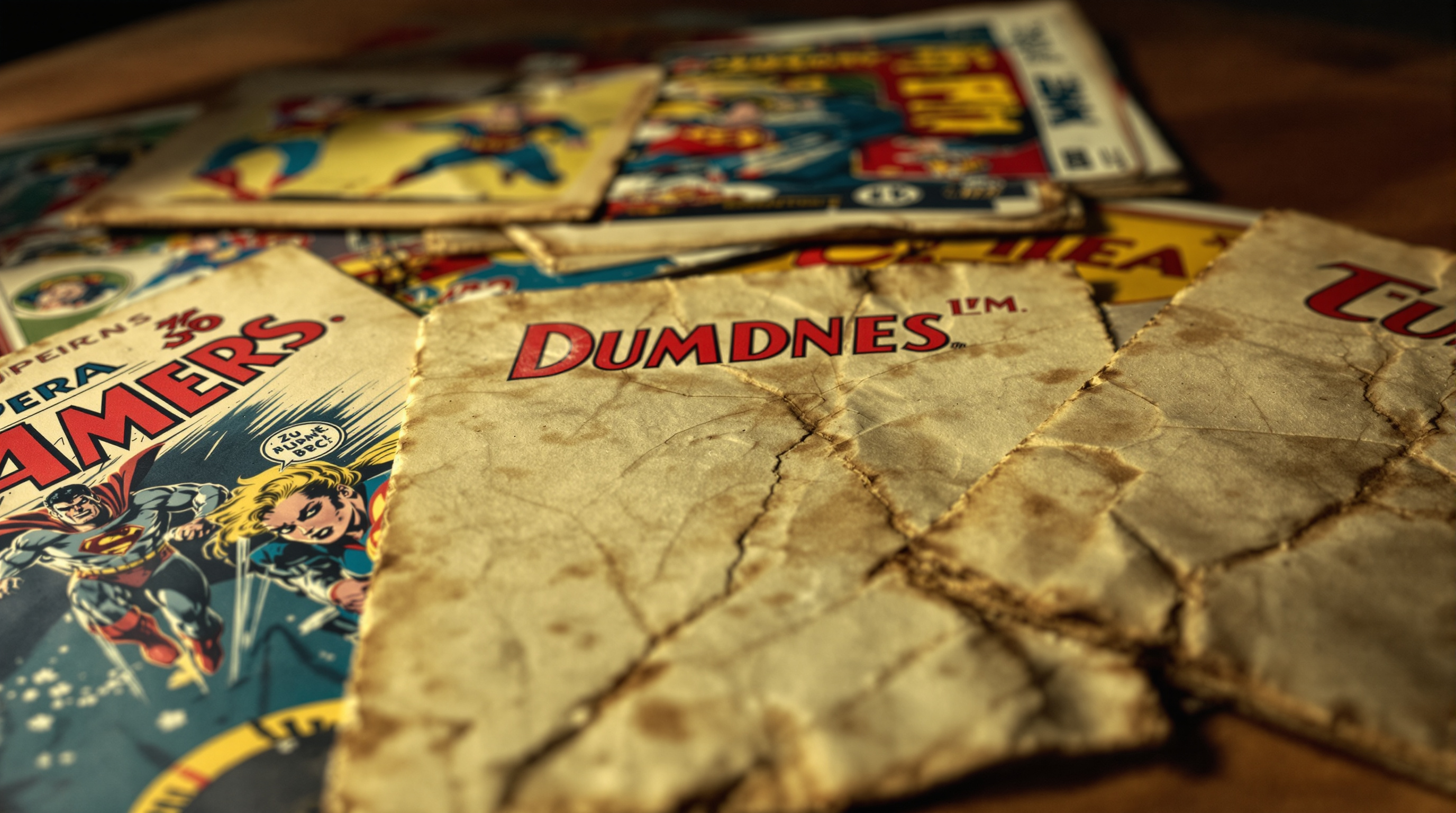
The Platinum Age (1897-1937)
Before superheroes dominated, comic strips in newspapers laid the groundwork. Characters like The Yellow Kid, Happy Hooligan, and Little Nemo pioneered sequential storytelling in print. Publishers eventually collected these strips into reprint books, establishing the comic book format.
The transition from newspaper reprints to original content marked a crucial evolution. According to The Grand Comics Database, early comic books experimented with adventure, humor, and detective stories before finding their iconic genre.
The Golden Age (1938-1956)
The Golden Age began with a single cover: Action Comics #1, June 1938, featuring Superman lifting a car. This moment changed everything. Created by Jerry Siegel and Joe Shuster, Superman established the superhero genre and sparked an industry explosion.
Key Golden Age developments include:
- 1938 - Superman debuts in Action Comics #1
- 1939 - Batman appears in Detective Comics #27
- 1940 - Robin, Flash, Green Lantern, and Hawkman debut
- 1941 - Captain America, Wonder Woman, and Aquaman arrive
- 1942 - World War II themes dominate comics
Wartime comics served dual purposes: entertainment and propaganda. Heroes fought Axis powers alongside American troops, boosting morale at home and abroad. Comics sold in unprecedented numbers, with some titles reaching circulation figures in the millions.
Post-war, superhero popularity waned. Crime, horror, and romance comics filled the void. EC Comics, publisher of Tales from the Crypt and Weird Science, produced sophisticated horror content that attracted adult readers and, eventually, controversy.
The Comics Code and Industry Crisis
Dr. Fredric Wertham's 1954 book "Seduction of the Innocent" accused comics of contributing to juvenile delinquency. Congressional hearings followed, and publishers adopted the restrictive Comics Code Authority to avoid government regulation. Many publishers folded, and the surviving industry sanitized its content dramatically.
The Silver Age (1956-1970)
The Silver Age revival began in 1956 when DC Comics reimagined the Flash with a new secret identity and origin in Showcase #4. This success led to revivals of Green Lantern, Hawkman, and the Atom. DC assembled these heroes as the Justice League of America.
Marvel Comics transformed the industry in 1961. Under editor Stan Lee and artists Jack Kirby and Steve Ditko, Marvel introduced flawed, relatable heroes:
- Fantastic Four (1961) - Dysfunctional family dynamics
- Spider-Man (1962) - Teenage hero with real problems
- X-Men (1963) - Outsiders fighting prejudice
- Avengers (1963) - Marvel's answer to the Justice League
Marvel's "Marvel Method" of collaborative creation and interconnected universe building set templates still used today. The Library of Congress recognizes this era as pivotal in establishing comics as legitimate American art.

The Bronze Age (1970-1985)
The Bronze Age brought maturity and social relevance. Landmark stories tackled drug addiction, racism, and political corruption. Notable milestones include:
- Green Lantern/Green Arrow - "Hard Traveling Heroes" addressed social issues
- Spider-Man drug storyline - Published without Comics Code approval
- Death of Gwen Stacy - Showed heroes could fail tragically
- Giant-Size X-Men #1 (1975) - Relaunched X-Men with international roster
Underground "comix" emerged as countercultural alternatives, featuring explicit content impossible under the Comics Code. Meanwhile, mainstream comics gradually loosened restrictions, allowing more sophisticated storytelling.
The Modern Age (1985-Present)
Two 1986 publications revolutionized comics: Frank Miller's "The Dark Knight Returns" and Alan Moore's "Watchmen." Both deconstructed superhero mythology with unprecedented psychological depth and literary ambition. Comics suddenly attracted mainstream literary attention.
The direct market system, selling through specialty comic shops rather than newsstands, changed distribution and enabled diverse content. Independent publishers like Image Comics (founded 1992) gave creators ownership of their work, producing hits like Spawn and The Walking Dead.
Today's comics landscape includes:
- Digital distribution - ComiXology and publisher apps provide instant access
- Graphic novel formats - Trade paperbacks and hardcovers reach bookstore audiences
- Media adaptations - Marvel and DC films drive mainstream awareness
- Diverse voices - More inclusive representation in characters and creators
From Action Comics #1 to today's digital releases, comics continue evolving while honoring their rich heritage. Understanding this history deepens appreciation for both classic and contemporary works.
The Graphic Novel Renaissance
In recent years, graphic novels have experienced a remarkable surge in mainstream acceptance. Bookstores now dedicate significant shelf space to the format, and titles routinely appear on bestseller lists alongside traditional prose fiction. The success of works spanning memoir, journalism, history, and literary fiction has expanded the audience for comics far beyond the traditional superhero readership.
This graphic novel renaissance has also fueled a boom in manga sales across Western markets, with Japanese comics now outselling American superhero titles in bookstore channels. The broadening of the comics audience represents perhaps the most significant shift in the industry since the superhero revival of the Silver Age.