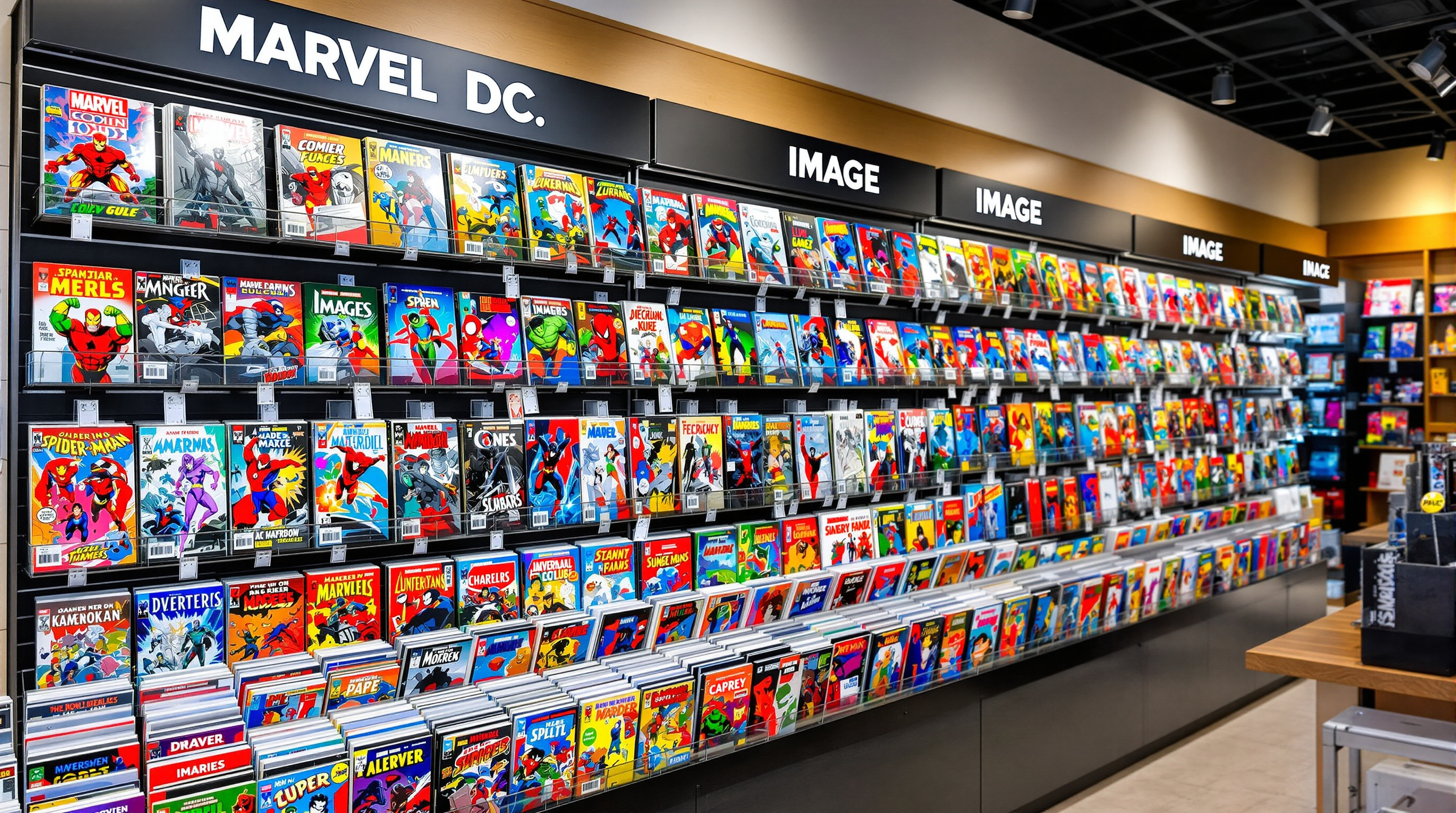
Marvel Comics
Marvel Comics stands as one of the two dominant superhero publishers, home to Spider-Man, the X-Men, Avengers, and thousands of other characters. Founded as Timely Comics in 1939, the company became Marvel in the 1960s under the creative leadership of Stan Lee, Jack Kirby, and Steve Ditko.
Key Marvel milestones:
- 1939 - Timely Comics publishes Marvel Comics #1 featuring Human Torch and Sub-Mariner
- 1941 - Captain America Comics #1 debuts
- 1961 - Fantastic Four #1 launches the "Marvel Age"
- 1962 - Amazing Fantasy #15 introduces Spider-Man
- 1963 - X-Men and Avengers debut
- 2009 - Disney acquires Marvel Entertainment
Marvel's interconnected universe approach, with characters crossing over and events affecting multiple titles, created the template now standard across media. The Marvel website provides current publishing information and digital access to their extensive library.
DC Comics
DC Comics, originally National Allied Publications, published the first superhero in Action Comics #1 (1938) and has shaped the genre ever since. Home to Superman, Batman, Wonder Woman, and the Justice League, DC's characters are cultural icons recognized worldwide.
Key DC milestones:
- 1935 - New Fun Comics #1, first comic with original material
- 1938 - Superman debuts in Action Comics #1
- 1939 - Batman appears in Detective Comics #27
- 1941 - Wonder Woman debuts in All Star Comics #8
- 1956 - Silver Age Flash launches superhero revival
- 1985 - Crisis on Infinite Earths streamlines continuity
DC's multiverse concept, with parallel Earths featuring alternate versions of characters, has been a creative hallmark since the 1960s. The company operates as part of Warner Bros. Discovery, connecting comics to film and television productions.
Image Comics
Image Comics, founded in 1992 by seven Marvel artists, revolutionized the industry with creator-owned publishing. At Image, creators retain full ownership of their work, keeping all rights and profits. This model attracted top talent and produced landmark series.
Notable Image series include:
- Spawn - Todd McFarlane's supernatural anti-hero
- The Walking Dead - Robert Kirkman's zombie epic
- Saga - Brian K. Vaughan and Fiona Staples' space opera
- Invincible - Superhero deconstruction adapted for animation
Image's success demonstrated viable alternatives to the traditional work-for-hire model, influencing industry practices and inspiring new publishers.
Dark Horse Comics
Dark Horse Comics, founded in 1986, publishes licensed properties (Star Wars, Alien, Predator) alongside original creator-owned work. Known for quality production and diverse genres, Dark Horse bridges mainstream and independent markets.
Notable Dark Horse properties:
- Hellboy - Mike Mignola's supernatural investigator
- Sin City - Frank Miller's noir anthology
- 300 - Frank Miller's historical epic
- Umbrella Academy - Gerard Way's dysfunctional superhero family
Independent Publishers
Beyond the major publishers, independent companies publish innovative work across all genres:
IDW Publishing - Licensed titles (Transformers, Teenage Mutant Ninja Turtles, Star Trek) and original content.
BOOM! Studios - Diverse lineup including Power Rangers, Firefly, and acclaimed originals like Something is Killing the Children.
Oni Press - Publisher of Scott Pilgrim and alternative comics with strong literary sensibilities.
Fantagraphics - Prestigious publisher of alternative comics, classic reprints, and comics scholarship. According to Publishers Weekly, independent publishers increasingly attract readers seeking content beyond superhero genres.
Manga Publishers
Japanese manga has achieved massive popularity in Western markets. Major manga publishers in English include:
- VIZ Media - Shonen Jump titles including Naruto, One Piece, My Hero Academia
- Kodansha Comics - Attack on Titan, Sailor Moon, Fairy Tail
- Yen Press - Diverse manga and light novel catalog
Understanding publisher specialties helps readers and collectors find content matching their interests while appreciating the industry's creative diversity.