Getting Started
Before diving into collecting, consider what type of collector you want to be. Some collect for investment potential, seeking key issues and first appearances that may appreciate in value. Others collect for reading pleasure, building libraries of their favorite characters or creators. Many collectors combine both approaches, enjoying their comics while being mindful of condition and value.
The most important rule is simple: collect what you love. A collection built on personal passion will always be more satisfying than one built purely on speculation. According to industry experts, the best collections reflect their owner's genuine interests.
Understanding Comic Book Grades
Condition is everything in comic collecting. A comic's grade dramatically affects its value, with the difference between grades often representing significant price variations. The industry uses a standardized 10-point scale:
- Mint (10.0) - Perfect in every way, essentially unheard of for vintage comics
- Near Mint (9.4-9.8) - Nearly perfect with minimal flaws, the target for most serious collectors
- Very Fine (8.0-8.5) - Excellent condition with minor wear
- Fine (6.0-6.5) - Above average with moderate wear but still attractive
- Very Good (4.0-4.5) - Shows significant wear but still complete and readable
- Good (2.0-2.5) - Heavy wear, may have minor pieces missing
- Fair/Poor (0.5-1.8) - Heavily damaged but still holds together
Professional grading services like CGC and CBCS provide authenticated grades sealed in protective cases. While professional grading adds cost, it provides confidence for buyers and sellers of valuable issues.
Storage and Preservation
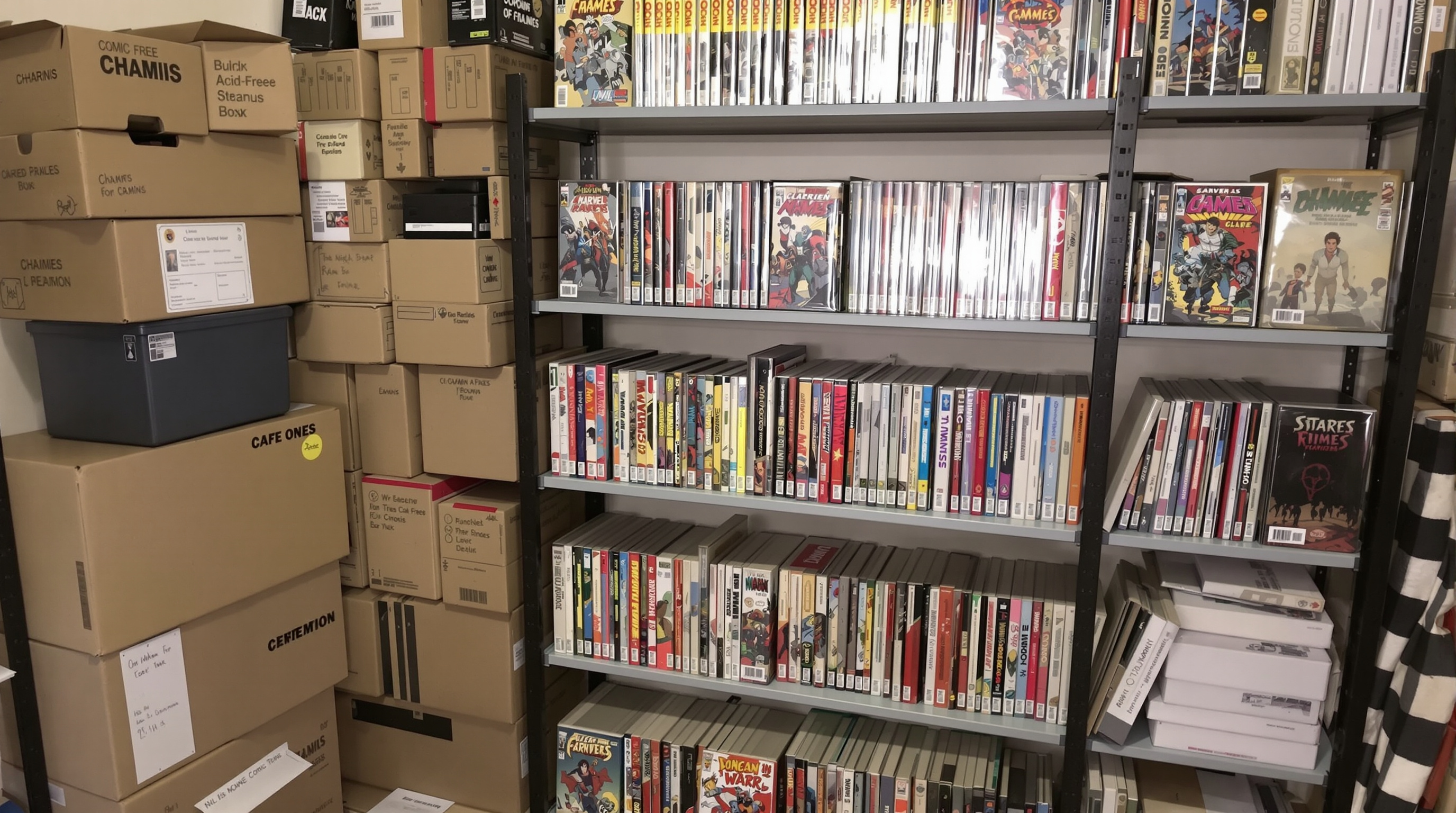
Proper storage protects your investment and ensures your comics remain enjoyable for years to come. Here are essential storage practices:
- Bags and Boards - Every comic should be stored in an acid-free polypropylene or Mylar bag with an acid-free backing board
- Comic Boxes - Store bagged comics upright in acid-free comic boxes, either short boxes (150-175 comics) or long boxes (250-300 comics)
- Environment - Keep comics in a cool, dry place away from direct sunlight, extreme temperatures, and humidity
- Handling - Always handle comics with clean, dry hands. Consider cotton gloves for valuable issues
Where to Buy Comics
Local Comic Shops - Your local comic book store is the heart of the collecting community. These shops offer new releases, back issues, and expertise from knowledgeable staff. Building a relationship with your local shop can lead to tips on sought-after issues and early access to new releases.
Conventions - Comic conventions range from small local shows to massive events like San Diego Comic-Con. Conventions offer access to dealers with vast inventories, often at competitive prices. The in-person inspection advantage makes conventions ideal for purchasing higher-value items.
Online Marketplaces - Websites and auction platforms connect buyers and sellers worldwide. While convenient, online purchasing requires careful attention to seller reputation and detailed photos when buying sight unseen.
Estate Sales and Thrift Stores - Occasionally, significant finds emerge from unexpected places. Estate sales of former collectors and random thrift store discoveries have yielded many collector's prized possessions.
Building Your Collection Strategy
A focused collection is often more satisfying than a scattered one. Consider organizing your collecting around:
- Characters - Complete runs of Spider-Man, Batman, or your favorite hero
- Publishers - Focus on Marvel, DC, Image, or indie publishers
- Eras - Specialize in Golden Age, Silver Age, or Modern Age comics
- Creators - Collect works by specific writers or artists you admire
- First Appearances - Hunt for key issues introducing important characters
Whatever your focus, maintain records of your collection. Spreadsheets, collection apps, or even simple notebooks help track what you own, what you've spent, and what you still need.
Avoiding Common Mistakes
New collectors often make preventable errors. Watch out for:
- Overpaying in excitement - Research prices before buying, especially for key issues
- Neglecting condition - A "deal" on a damaged comic is rarely a deal
- Speculation buying - Chasing hot books often leads to disappointment when hype fades
- Poor storage - Skipping proper bags and boards causes preventable damage
- Counterfeit concerns - Learn to identify restored or counterfeit comics, especially for high-value purchases
Collecting should be enjoyable. Start within your budget, learn continuously, and connect with other collectors. The community welcomes newcomers, and there's always more to discover in this rich hobby.
Digital Collecting and Modern Formats
The rise of digital comics has created a new dimension for collecting. Services like Marvel Unlimited and DC Universe Infinite offer vast libraries at subscription prices, while digital storefronts allow individual issue purchases. Some collectors maintain both physical and digital collections, using digital for reading and physical for preservation and investment.
NFT comics and blockchain-verified digital editions have also emerged as an experimental collecting frontier, though the market remains volatile and the long-term value proposition is still being established. Traditional physical collecting remains the dominant form, with graded comics continuing to set auction records year over year.
Pro Tip
Start by buying what you want to read, not what you think will appreciate. The comics you enjoy will always have value to you, regardless of market trends.